Introduction
English has become an important skill for education, careers, freelancing, business, and everyday communication. Many students understand English when reading or listening but feel nervous when speaking.
The good news is that speaking English can be improved through regular practice and the right learning methods. You do not need to know every English word or grammar rule before you start speaking.
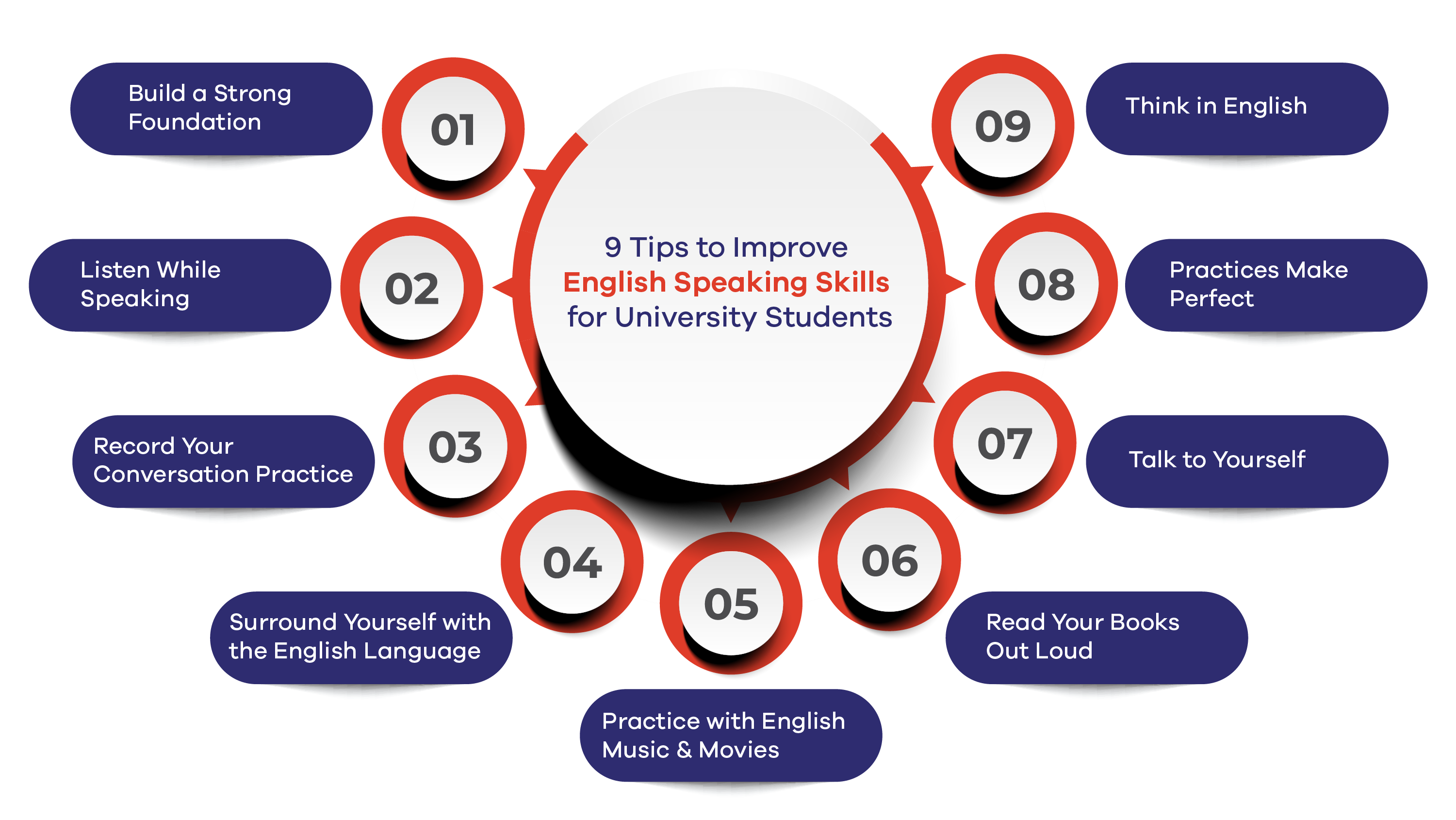
In this article, we will discuss 10 practical ways to improve your English speaking skills.
1. Speak English Every Day
The best way to improve speaking is to practice speaking regularly. Try to speak English for at least 15–30 minutes every day.
You can talk about your daily routine, studies, work, hobbies, family, or future plans.
For example:
“I woke up at 7 o’clock today. I had breakfast and started my work. In the evening, I plan to study English.”
Do not worry about making mistakes. Your main goal at the beginning should be to become comfortable speaking.
2. Learn Common English Phrases
Instead of memorizing individual words, learn complete phrases that you can use in real conversations.
For example:
- How are you doing?
- What do you do?
- Could you please help me?
- I would like to know more about this.
- Let me think about it.
- I completely agree with you.
Learning phrases makes it easier to communicate naturally.
3. Improve Your Vocabulary
A good vocabulary helps you express your thoughts more clearly.
Start by learning 5–10 useful words every day. Don’t just memorize their meanings. Learn how to use them in sentences.
For example:
Improve — to make something better.
“I want to improve my English speaking skills.”
4. Listen to English Every Day
Listening helps you understand pronunciation, sentence structure, vocabulary, and natural conversations.
You can listen to:
- English podcasts
- Educational videos
- Interviews
- English news
- Audiobooks
- English conversations
Try to listen to English for at least 15 minutes every day.
5. Practice Speaking in Front of a Mirror
Mirror practice is a simple technique that can help reduce nervousness.
Stand in front of a mirror and speak about a topic for two or three minutes. Look at yourself while speaking and try to maintain natural eye contact.
You can talk about topics such as:
- My introduction
- My family
- My education
- My favorite hobby
- My future goals
6. Think in English
Many beginners first think in their native language and then translate everything into English. This can make speaking slow.
Start with simple thoughts in English.
Instead of thinking:
“Mujhe pani peena hai.”
Try to think:
“I need to drink water.”
With regular practice, thinking in English will become easier.
7. Record Your Voice
Recording yourself is an excellent way to identify your weaknesses.
Choose a topic and speak for two minutes. Record your voice and listen to it afterward.
Pay attention to:
- Pronunciation
- Grammar
- Repeated words
- Speaking speed
- Pauses
Repeat the same exercise after a few days and compare your progress.
8. Practice English Conversations
Speaking with another person gives you real communication practice.
Find a friend, teacher, classmate, or speaking partner and practice conversations regularly.
Start with simple topics and gradually move toward more advanced discussions.
9. Learn Grammar Step by Step
Grammar is important, but you don’t need to master every grammar rule before speaking.
Start with essential topics such as:
- Tenses
- Parts of speech
- Articles
- Prepositions
- Pronouns
- Sentence structure
- Modal verbs
Learn one topic at a time and immediately use it in your conversations.
10. Be Consistent
The most important factor in learning English is consistency.
Studying English for five hours once a week is usually less effective than practicing for 30 minutes every day.
Create a simple daily routine:
15 minutes: Vocabulary
15 minutes: Listening
15 minutes: Speaking
15 minutes: Grammar
With consistent practice, you can gradually become more confident and fluent.
Conclusion
Improving your English speaking skills takes time, practice, and consistency. Don’t be afraid of making mistakes. Mistakes are a natural part of learning.
Start with simple conversations, practice every day, improve your vocabulary, listen to English regularly, and gradually challenge yourself with more advanced topics.
Ready to Improve Your English?
Our academy offers structured English Grammar and Spoken English courses from basic to advanced level, designed to help students develop their grammar, vocabulary, pronunciation, confidence, and communication skills.
Start learning today and take the next step toward confident English communication.
